Winter in Ontario can be beautiful, but it often comes with its challenges, icy, snowy mornings, and the constant worry about keeping your driveway safe. That’s why snow removal in Milton is so important. Even a small misstep can turn a routine chore into a stressful experience, and if you are unsure of the best way to protect your entrance during the season.
In this blog, I’ll walk you through the key do’s and don’ts of snow removal for concrete and asphalt driveways, so you can enjoy a safer, stress-free winter without worrying about what’s underneath the snow .
Why Driveway Material Matters in Winter
Not all materials react the same way to snow, ice, and winter chemicals. Knowing whether your driveway is concrete or asphalt helps you apply the right snow removal techniques and avoid costly damage.
Here’s a quick comparison:
| Feature | Concrete Driveways | Asphalt Driveways |
| Durability | Very strong and long-lasting | Flexible, handles freeze-thaw cycles well |
| Sensitivity | Sensitive to salt and harsh scraping | Can be gouged by metal tools; binder can dry out |
| Snow & Ice Care | Requires concrete-safe ice melt and careful shoveling | Shovel carefully, avoid heavy plows, use sparing de-icers |
| Winter Risks | Surface scaling, cracks, spalling | Potholes, heaving, uneven surfaces |
| Best Practices | Plastic or rubber shovels, frequent clearing, proper drainage | Plastic blades, frequent clearing, monitor water pooling |
Understanding these differences helps explain why some snow removal methods are safer for one material than the other.
Do’s & Don’ts of Driveway Snow Clearing in Milton
For Concrete Driveways (Do’s)
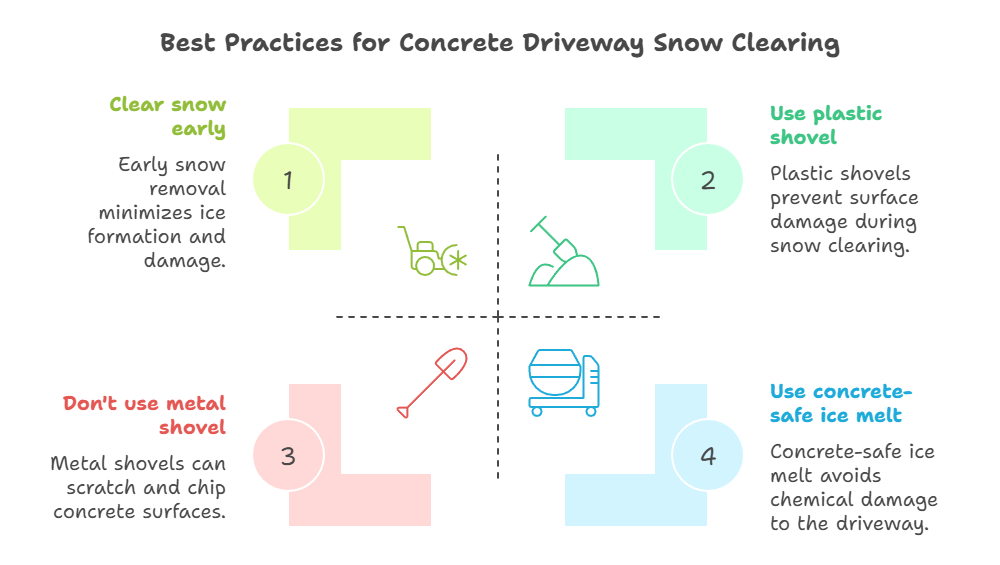
- Use a plastic or rubber-blade shovel (e.g., poly-blade) – Avoid metal shovels that can scratch or chip the surface.
- Choose concrete-safe ice melt – Focus on products explicitly labeled as concrete-safe (like Calcium Magnesium Acetate (CMA) or sugar-beet-based blends). Avoid products containing high levels of Sodium Chloride (rock salt), which chemically damages and scales new or unsealed concrete.
- Clear snow early and often – Removing snow before it compacts reduces ice formation and prevents freeze damage.
- Ensure proper drainage – Standing water can freeze and cause surface cracks or scaling.
(Don’ts)
- Don’t use metal shovels or plows on bare surfaces.
- Don’t apply harsh salt, especially on new concrete.
- Don’t pile snow against driveway edges.
- Don’t chip at ice with sharp tools.
For Asphalt Driveways (Do’s)
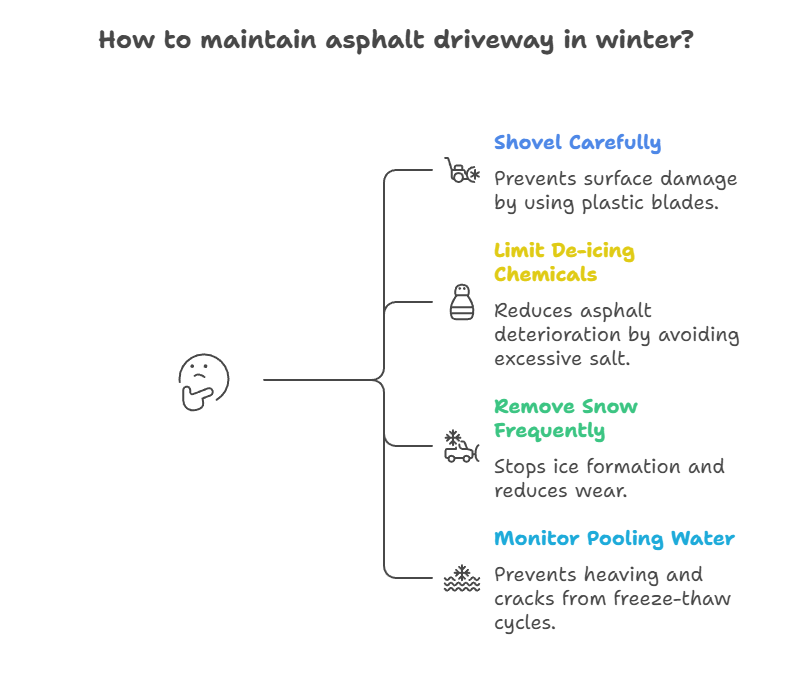
- Shovel carefully or use plastic snow blower blades – Prevent gouging and surface damage.
- Limit de-icing chemicals – Excessive salt can dry out the asphalt binder, causing surface deterioration.
- Remove snow frequently – This stops ice layers from forming and reduces wear.
- Monitor pooling water – Freeze-thaw cycles with standing water can cause heaving or cracks.
(Don’ts)
- Don’t use aggressive scraping tools or metal blades.
- Don’t overload driveway edges with snow piles.
- Don’t ignore small cracks, they can worsen over winter.
- Don’t overuse concentrated chemicals that dry out the asphalt binder.
General Snow Removal Tips for All Driveways
While some snow removal techniques differ depending on your driveway material, there are also general best practices that apply to all driveways, whether concrete or asphalt. These tips help protect your surface and make snow clearing safer and more efficient:
- Shovel in layers: Removing small amounts of snow at a time prevents strain and reduces surface damage.
- Keep equipment off driveway edges: Whether using a plow or snow blower, staying slightly away from edges protects landscaping and the surface.
- Use ice melt carefully: Apply sparingly and according to your driveway type. Too much chemical can harm concrete or asphalt.
- Prioritize safety: Wear proper footwear and gloves to prevent slips and injuries.
- Mark driveway edges: Helps prevent accidental damage to curbs, plants, or edging while plowing.
These universal tips complement the material-specific do’s and don’ts, giving you a complete winter care strategy for your driveway.
When to Call a Professional for Snow Removal in Milton
While many homeowners can handle routine snow clearing, some situations are best left to professionals. You should call experts if you notice:
- Large cracks, potholes, or heaving
- Uneven surfaces or drainage issues
- Damage from previous snow removal attempts
If you are consistently struggling with pooling water or ice that reappears quickly, it may be a sign of underlying grading or structural problems that require a professional assessment. Addressing these structural issues now will save you from major concrete or asphalt repair in Milton next spring.
Professionals have the tools and knowledge to protect your driveways, preventing costly repairs and ensuring safe winter access.
Conclusion
Winter brings its challenges, but keeping your driveway safe and functional doesn’t have to be stressful. By following these do’s and don’ts for snow removal in Milton and applying general winter care tips, you can protect both concrete and asphalt surfaces from damage.
Remember: frequent snow clearing, using the right tools, and knowing when to call a professional make all the difference. With careful attention and proper winter care, your driveway can survive the season intact, ready for spring without surprises.
If you ever feel unsure about handling snow or notice issues with your driveway, consulting a professional can help protect your surfaces and give you peace of mind this winter. Contact us at 416-606-2507 and get a free quote. Learn more about us by visiting our site.
Frequently Asked Questions (FAQs)
Q1. Can I use any type of ice melt on my driveway?
A: Not all ice melts are created equal. Concrete and asphalt react differently to chemicals. For concrete, use concrete-safe products like calcium magnesium acetate. Asphalt can tolerate some salt, but overuse may dry out the binder and cause surface wear. Always read product labels and apply sparingly.
Q2. How often should I remove snow during heavy snowfall?
A: Frequent snow clearing is key. Removing snow before it compacts helps prevent ice buildup and reduces the risk of cracks or surface damage. In Milton winters, it’s ideal to clear multiple times during a storm, especially after heavy accumulation.
Q3. Is it safe to use a snow blower on all driveways?
A: Snow blowers are effective, but care is needed. Use plastic or rubber blades to avoid scratching concrete or gouging asphalt. Also, avoid running the blower directly against driveway edges to protect landscaping and surfaces.
Q4. What should I do if ice keeps forming despite snow removal?
A: Persistent ice may indicate drainage issues or low spots on your driveway. In these cases, consider minor grading adjustments or using concrete/asphalt-friendly de-icers in targeted areas. If ice continues to be a problem, a professional can assess drainage and surface condition.
Q5. When is the best time to inspect my driveway after winter?
A: Spring is the ideal time for a thorough inspection. Look for cracks, potholes, or heaving that may have developed during freeze-thaw cycles. Early detection allows for timely repairs, preventing bigger problems and protecting your investment.
Q6. Can snow removal affect my landscaping near the driveway?
A: Yes. Piling snow against edges or using metal shovels/plows too close can damage plants, lawn edges, or mulch beds. Follow safe snow removal practices and mark driveway boundaries if possible to protect nearby landscaping.